What is it?
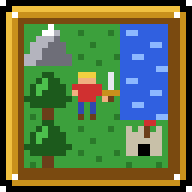
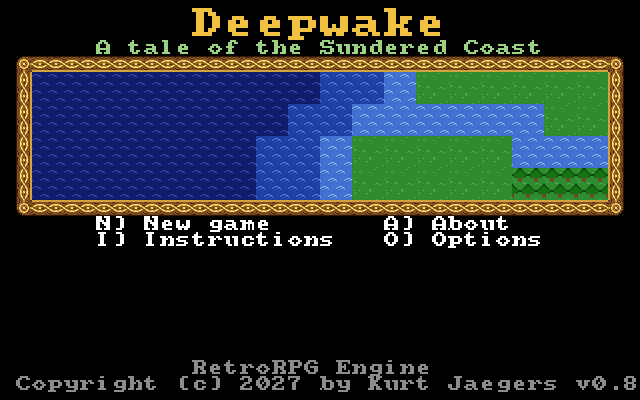
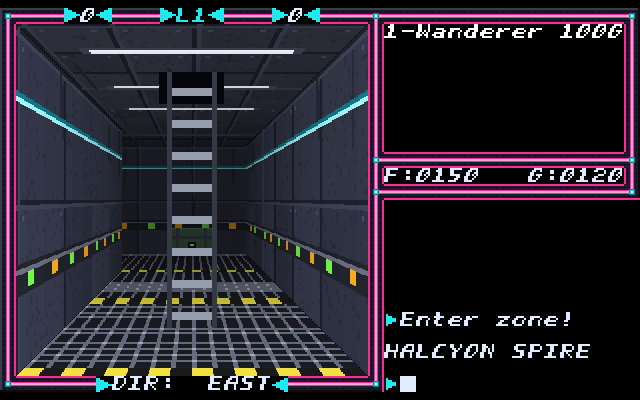
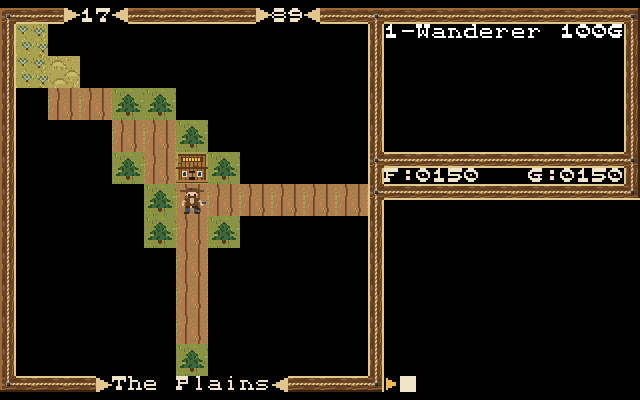
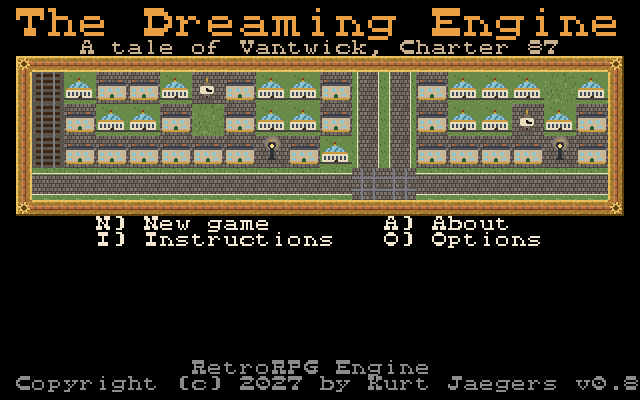
RetroRPG Engine is an engine for designing and playing RPGs inspired by the computer role-playing games of the early 8-bit days: a framed tile map, a party roster, a scrolling message log and one-key commands.
Each game is a module, a set of data files holding its maps, towns, dungeons, people, items and quests. The engine reads the module and plays it. The same engine runs a fantasy quest, a spy thriller or a voyage between the stars.
It runs on the web, Android and Windows. The Windows version includes the RetroRPG Module Editor, a complete adventure creator.
Modules can be downloaded, created with the editor, or shared by other players.
What you will find
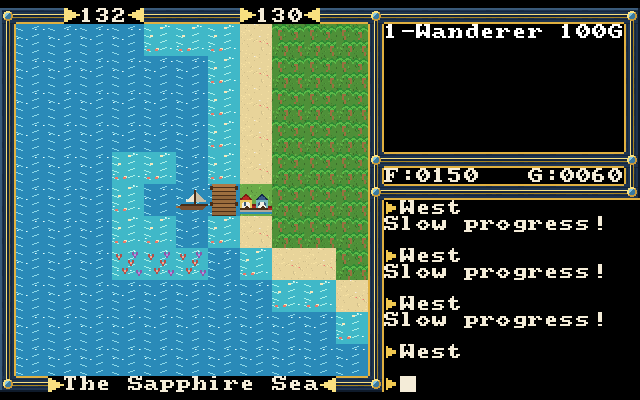
- An overland map to explore on foot, on horseback, by ship or by balloon
- Towns full of people to talk to: ask about names, jobs and rumors
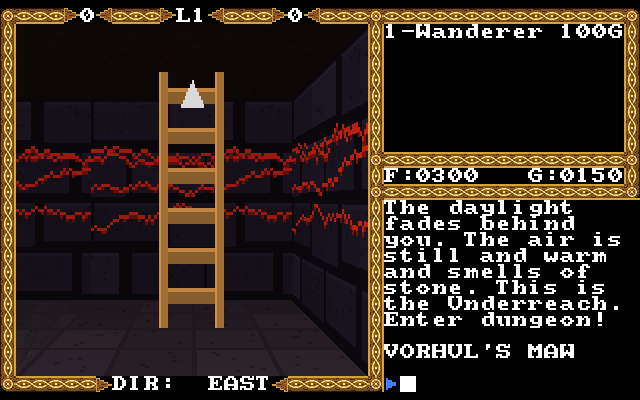
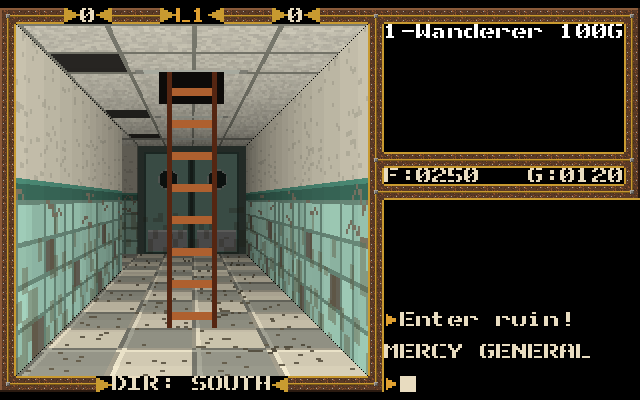
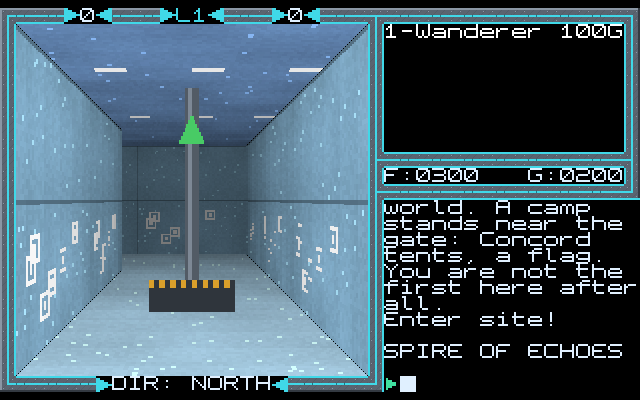
- First-person dungeons full of treasure and things in the dark
- Tactical battles on a grid, fought by your whole party
- Character creation, shops, inns, quests and companions who join your cause
- Keyboard, mouse and touch controls
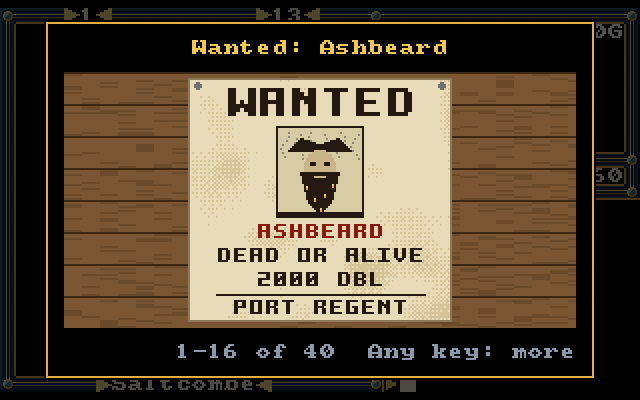
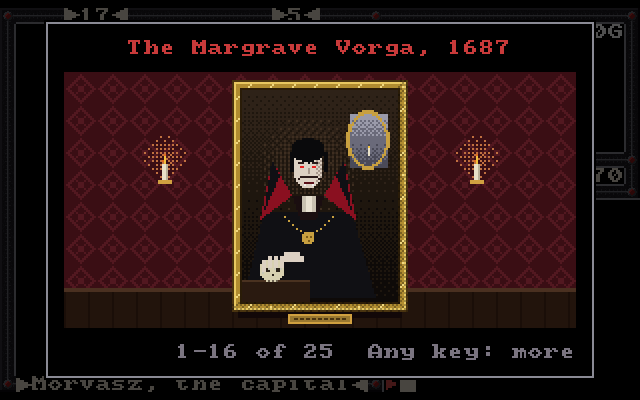
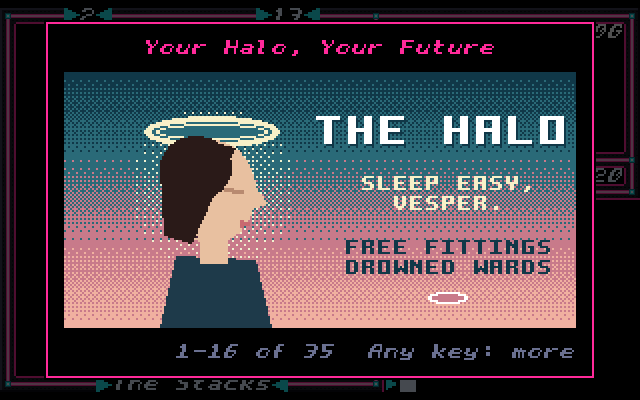
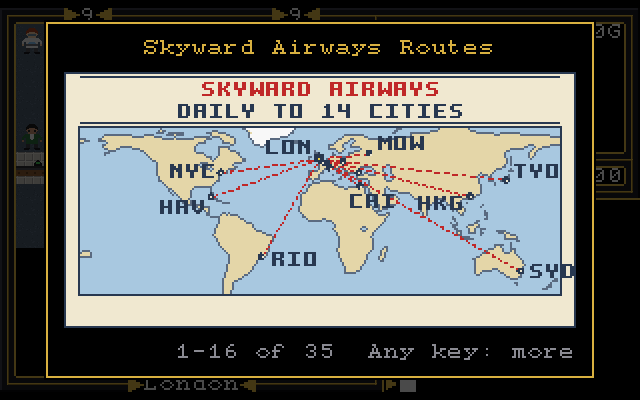
- Nine pre-built themes: Fantasy, Sci-Fi, Steampunk, Horror, Pirate, Western, Cyberpunk, Post-Apocalyptic, and Modern
- Nine sample adventures using the theme packs. All of these can be opened with the editor. (Windows build required)
Play offline
Prefer a desktop or phone version? Both versions of the game include all nine adventures.
RetroRPG Engine
The game for Windows 11. Unzip the folder anywhere and run rpg_retro_engine.exe.
RetroRPG Module Editor
Build your own adventures: maps, towns, dungeons, people and quests. Unzip it and run
rpg_module_editor.exe.
RetroRPG Engine
An APK to install on your phone or tablet. Allow installs from unknown sources when Android asks.
Download the APKThe adventure generator
The Module Editor can build for you. Pick a theme and a seed, and it makes a whole adventure: a world, its towns and dungeons, the people who live there, and a story that ties them together. It can also make a single town or dungeon for your own world, or fill in the missing pieces of an adventure you started.
Before it hands an adventure over, the editor plays it. A robot party walks the whole story on the real engine, from the first conversation to the final battle. If it gets stuck, the editor tries the next seed.
Everything is made from the editor's own name lists, phrase books and map makers. It needs no internet connection and uses no outside AI service.
Every generator chapter is in the Designer's Handbook.
What it can make
- Adventures: a quest giver, a goal (a villain, a relic or a captive), shards that break the seal on the last dungeon, side quests, an intro and endings
- Finish my adventure: finds what your module is missing (unreachable towns, empty dungeons, people with nothing to say, no ending) and fills only what you tick
- Worlds: islands, continents or archipelagos, with towns joined by roads, bridges and dungeon trails
- Towns from hamlet to city, with shops, inns, healers and townsfolk, and dungeons of a dozen kinds, from crypts and mines to bunkers and wrecks
- Portraits drawn from a description such as “old dwarf smith with a red braided beard, holding a hammer”
- Names for people, towns, regions, sites and shops in all nine settings. A 🎲 beside every name box rolls a new one.
- Your work stays yours: generated content is marked, seeds always repeat the same result, anything you edit is never overwritten, and every run can be undone
What is this?
RetroRPG Engine is my answer to the question: "What if Adventure Construction Set could make games like Ultima IV, Wasteland, Questron, Legacy of the Ancients and the other great adventures of the early 8-bit computer era?" I know the Bard's Tale Construction Set was out back then too, and then Forgotten Realms: Unlimited Adventures, but in both cases those were strictly 3D crawler type games and didn't capture the open world feel of the early 8-bit computer era.
Of course, I would be remiss not to mention other titles like the Shard of Spring, Demon's Winter, Wizardry, Might & Magic, The Faery Tale Adventure, and Dragon Wars. I'm sure I'm missing some (many) others that influenced me over the years.
The Commodore 64
While it wasn't my first computer (I had an Atari 400 before it), the Commodore 64 was my first introduction to computer game programming. A friend and I went pretty far down the rabbit hole in coding a similar RPG from scratch on the C64 in Assembly language.
The C64 was no doubt a magical computer for many people and with the recent release of the C64 Ultimate, I was reminded of the hours of enjoyment I got from these games.
Building my own
I also spent hours in Adventure Construction Set, drawing terrible pixel art, mapping out dungeons, scripting events and building adventures that pretty much no one else ever played. The "Let ACS finish the Adventure" feature was both exciting and frustrating, as it gave you something new to play, but often made little sense.
All of that led to a few false starts over the years. I used to have a website called XNA Resources back when XNA (now recreated as MonoGame) first launched. That led to a three-book deal on writing Xbox and Windows games with XNA. I started building a similar project in Pico-8 when that was released - constructing a game framework similar to what I had used in XNA.
You'll notice that this engine isn't a direct clone of any of these games - it draws inspiration from them (in particular their C64 incarnations) and implements some of my favorite ideas and mechanics from them.
Why it looks like this
The player looks as if it could be running on a Commodore 64, without the loading times or color limits of that machine. Every game takes place in a 320 × 200 screen with a stylized frame, a party list on the right and a message scroll beneath it.
That small, fixed screen is a deliberate constraint. It keeps adventures focused, leaves room for the player's imagination, and means one person can build a complete game in a reasonable amount of time. The same frame holds a fantasy kingdom, a spy thriller or a cyberpunk city.
The target audience
I would be lying if I didn't say that this is partially a project for myself. But I also hope it revives fond memories for others who enjoyed similar games in their youth. Perhaps for those who are looking for a straightforward tool to create their own adventures without worrying about things like seamless tilesets or complex scripting, this engine provides a simple yet flexible platform.
Newcomers to this style of game will find an accessible entry point, while veterans can enjoy the nostalgia and simplicity of the design.
No code, graphics or story from these games was used to make this project. Naming them as inspiration is not intended to challenge the ownership or copyright of any of these fine products. These are all adventures I loved growing up.
Theme packs
A theme pack re-skins the whole game with one line in a module: map tiles, people, monsters, dungeon walls, the screen frame and the music. Nine packs come with the engine, and the editor can start a new adventure from any of them.
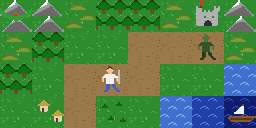
Fantasy
Castles, forests and dragons: the default look of sword-and-sorcery quests. Used by Deepwake.
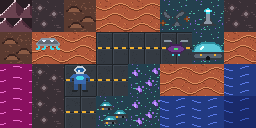
Sci-Fi
Alien planets, colony domes, starships and strange life forms. Used by The Fading Beacons.
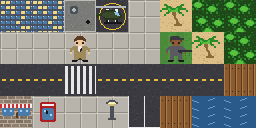
Modern
Cities, cars, casinos and henchmen for spy, mystery and action stories. Used by Operation Nightjar.
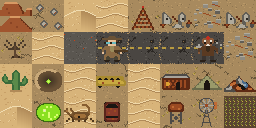
Post-Apocalyptic
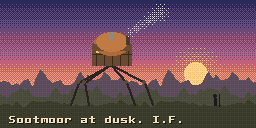
Ash, wrecks, scrap towns and raiders on the roads after the fall. Used by Cinderfall.
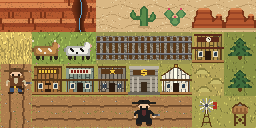
Western
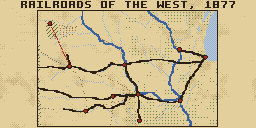
Saloons, railroads, cattle drives, gold mines and outlaws. Used by The Iron Road.
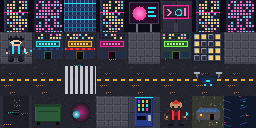
Cyberpunk
Neon towers, corporations, hackers, drones and cyberspace. Used by Neon Requiem.
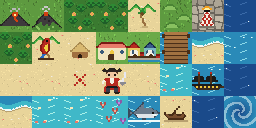
Pirate
Tropical isles, ports, forts, sea caves and ships under sail. Used by The Sunken Crown.
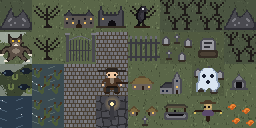
Horror
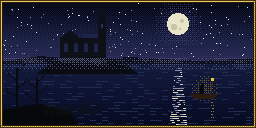
Moors, graveyards, manors and crypts full of gothic and cosmic dread. Used by The Crimson Vigil.
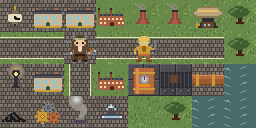
Steampunk
Brass, steam, factories, automatons and airships. Used by The Dreaming Engine.
Adventures included
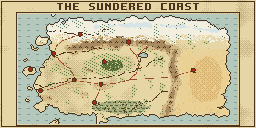
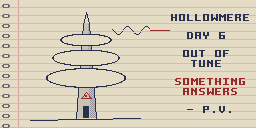
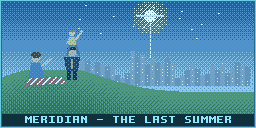
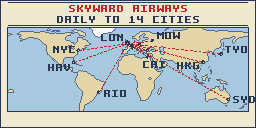
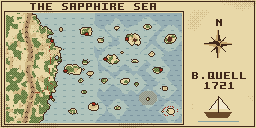
Nine full adventures come with the engine. Press Play to start one, or Manual to read its player's manual. On the title screen, M) Modules switches between them.

Join the Discord
Talk with other players and adventure designers, share the adventures you make, report bugs and suggest features.
Join on DiscordSupport the game
If you enjoy RetroRPG Engine and want to see more adventures, themes and features, you can support its development on Patreon.
Support on Patreon